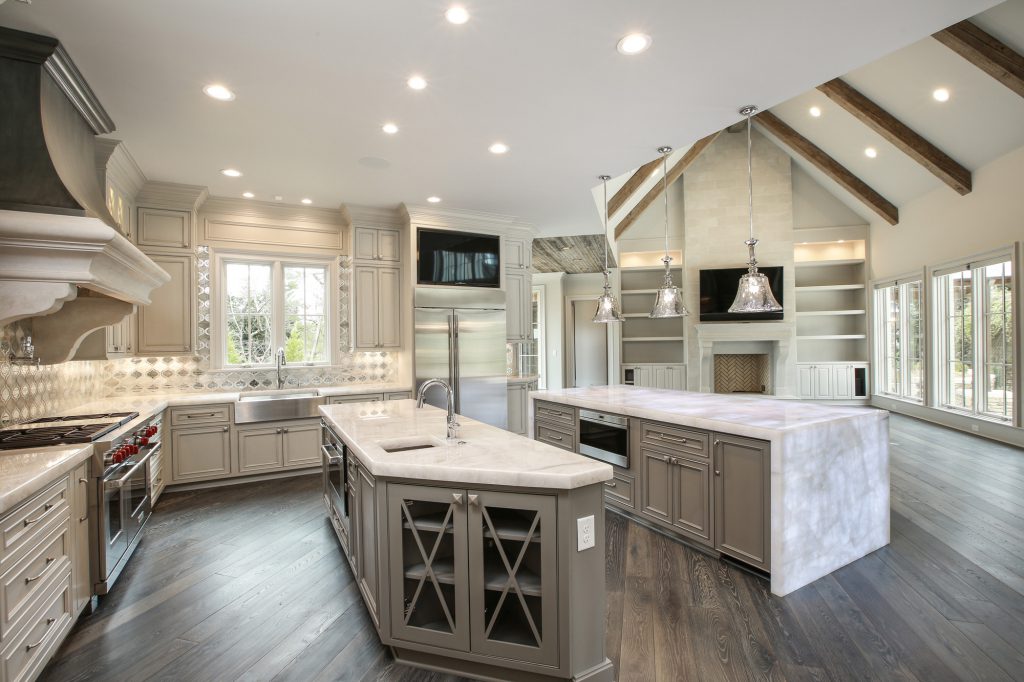
Melbourne architects have a particular talent: they take houses that should feel cramped, narrow terraces, post-war brick boxes, awkward extensions, and somehow make them breathe. Light gets pulled deeper into plans. Circulation stops being a hallway problem and becomes a lived experience. And that classic Melbourne trick, making the backyard feel like part of the house, keeps showing up, because frankly, it works.
One big reason this style lands so well here is that it respects constraints. Climate swings. Planning rules. Neighbours close enough to borrow sugar from through the fence. Budget reality. The good projects aren’t “big,” they’re smart.
What this style actually delivers (not just pretty photos)
If you’re planning contemporary home renovations in Melbourne, you’re usually chasing a few core outcomes, and this approach hits them with a kind of disciplined consistency:
– More daylight without turning the place into a greenhouse
– Layouts that cope with real life (kids, WFH, guests, clutter)
– Better thermal performance, less drafty in winter, less punishing in summer
– A clearer relationship to outdoors, even if “outdoors” is a 4m-wide courtyard
And yes, it can still preserve character. I’ve seen plenty of projects where the front rooms stay heritage-faithful, cornices, fireplaces, the whole story, while the rear becomes a contemporary pavilion that earns its keep every day.
One-line truth: a renovation that doesn’t improve comfort is just expensive decorating.
Stop carving houses into little rooms. (Unless you enjoy dead space.)
Open-plan gets blamed for everything, noise, mess, no privacy. Some of that criticism is fair. But the Melbourne-architect version is rarely a giant featureless void. It’s a hub, and it’s controlled.
Here’s the thing: the magic isn’t removing walls; it’s managing sightlines and thresholds. A kitchen that can see the dining table and the yard changes how the house operates. So does aligning a passage so you catch a glimpse of greenery instead of a blank wall.
A few moves that consistently work:
– Big sliders or bifolds to the garden, but with shading designed from day one (don’t “add it later,” you’ll regret it)
– Zoning with furniture and ceilings: a bulkhead, a change in ceiling lining, or a pendant can “draw a room” without building one
– Material continuity from inside to out, concrete to concrete, timber to timber, so the transition reads as natural rather than staged
Indoor plants near the threshold aren’t just styling either. They help visually soften that inside/outside seam (and psychologically, people read it as calmer).
Light and flow: the unglamorous part that makes everything feel expensive
Most homeowners ask for “more light.” What they’re really asking for is a house that doesn’t feel tiring.
The better renovations treat daylight like a building material. Orientation matters, obviously, but so does where the light lands. A skylight that dumps sun onto a glossy benchtop can be unbearable. A clerestory that washes a textured wall? Beautiful, all day.
In Melbourne, you’ll see a lot of:
– Courtyard bites cut into the plan to bring light into the middle
– Borrowed light, glazing over internal doors, highlight windows, partial-height partitions
– Soft shading to avoid glare and overheating (external shading beats internal blinds in real performance terms)
Now, this won’t apply to everyone, but if you’re changing window sizes or adding big glazing, don’t guess. Get thermal modelling or at least proper passive design advice. A bright room that’s unlivable in February isn’t a win.
A quick stat to ground this: Buildings account for around 37% of global energy-related CO₂ emissions when you combine operational and construction impacts (UNEP, 2023 Global Status Report for Buildings and Construction). Renovation choices matter more than people think.
Timber + tactility: why Melbourne homes keep coming back to warmth
You can spot a Melbourne renovation from across the room sometimes. Not because it’s trendy, but because it has texture.
Timber is the obvious player. It does a lot of heavy lifting: warmth, scale, acoustics, and that slightly imperfect “human” feel that plasterboard can’t manage. And the best uses aren’t necessarily huge, often it’s a few decisive moments:
– a timber-lined ceiling that pulls you toward the yard
– a veneered joinery wall with grain-matched panels (costly, yes, but it reads as calm)
– stair treads or a handrail that’s genuinely nice to touch
I’m opinionated on this: high-gloss timber finishes are usually the wrong move in family living zones. They show wear, amplify glare, and look dated fast. Oils and low-sheen finishes age better, and they forgive real life.
And don’t sleep on acoustics. Open plans get loud. Soft textiles, rugs, even well-designed acoustic panels can turn a “great-looking” space into a genuinely comfortable one (especially when there are hard surfaces everywhere).
Sustainable materials + energy-saving strategies (the part that pays you back)
People often treat sustainability like a separate layer, solar here, a heat pump there. The more coherent Melbourne projects integrate it into everything:
Materials (embodied energy + longevity)
– locally sourced timbers and bricks where feasible
– low-VOC paints and finishes for indoor air quality
– recycled content materials used where they’ll actually last (not just for the bragging rights)
Passive design (comfort before gadgets)
– insulation upgrades and airtightness improvements
– high-performance glazing only where it matters
– shading designed to block summer sun while admitting winter sun
Systems (then tech on top)
– efficient hot water (often heat pump)
– induction cooking if you’re already rewiring
– solar PV where roof orientation allows it
One practical note from projects I’ve worked around: if you’re redoing the roof, it’s the easiest time to make the house “solar-ready” even if panels come later, conduit runs, switchboard capacity, roof structure checks. Future-proofing is cheaper during demolition than after plaster is up.
Adaptive reuse: when the old bits aren’t a nuisance, they’re the point
Renovation in Melbourne often means negotiating with history. Sometimes literally, heritage overlays, neighbourhood character controls, all of that. But even when there’s no formal protection, older houses have a kind of spatial intelligence: high ceilings, deep skirtings, solid frames, and proportions that still feel good.
Adaptive reuse done well isn’t a collage. It’s a conversation.
Keep what has integrity. Replace what doesn’t. And make the junction between old and new deliberate, clean, legible, confident, rather than pretending the extension has always been there (everyone can tell).
Technically, the success factors are pretty straightforward:
– early structural assessment (don’t romanticise rotten bearers)
– mapping planning constraints before you design the dream layout
– using existing fabric to reduce waste and embodied carbon where it makes sense
I’ve seen a retained brick party wall become the emotional centre of a modern rear addition. That’s not nostalgia. That’s good use of what you already have.
Smart comfort (not gadget nonsense)
Look, smart tech is useful when it’s boring.
Smart thermostats and zoning can smooth out Melbourne’s mood swings, cold mornings, warm afternoons, then cold again. Occupancy sensors can stop you lighting empty rooms. Automated blinds can reduce overheating. Great.
But the hierarchy matters: fix the envelope first. No sensor can compensate for poor insulation and leaky windows. Once the building performs, tech becomes the polish instead of the crutch.
(Also: choose systems with local support. When something fails, you want parts and service, not an online forum thread from 2019.)
Texture, colour, detail: the “Melbourne” cadence
This is where the good architects quietly separate themselves from the rest. They don’t rely on one hero finish. They layer small decisions:
Tactile plaster beside smooth cabinetry. Matte paint absorbing light next to a glazed tile splashback throwing it around. A restrained neutral field with one genuinely brave colour moment, cabinetry, a powder room, a piece of joinery.
Hardware matters more than people expect. So do corner details. So does how timber meets stone meets plaster.
You don’t need more “features.” You need fewer, better ones.
Budgeting + phasing (because reality always shows up)
If you’re trying to control cost, phasing is your friend, but only if you phase intelligently. Structural work and building envelope upgrades come first. Then the parts you see every day. Then the nice-to-haves.
A workable budgeting approach I trust in practice:
– set non-negotiables (thermal comfort, waterproofing, structure)
– include a contingency that’s actually real (older homes hide surprises)
– plan around lead times, joinery and windows can bottleneck a whole schedule
– align work with seasons if you’re opening the house to the elements
Renovations don’t fail because people lack taste. They fail because decisions are made too late, in the wrong order, with money already committed elsewhere.
If there’s a unifying thread across Melbourne’s best contemporary renovations, it’s not a “look.” It’s a mindset: respect the old, shape the light, make the plan work harder, and spend money where comfort and durability live. Everything else is noise.